 With the harvest I have this year (see Too Many Tomatoes), I’ve had to look for various ways to process and preserve the massive quantities of my tomatoes this year. One method I’ve been using is simple: I toss cleaned whole or trimmed tomatoes into a stock pot with some salt, and a cup or two of water, roughly chop with a metal pastry blade, and then bring to a boil, cook down, puree with a hand-blender, strain into another stock pot, and reduce on low heat to a tomato sauce consistency, and freeze in pints in ziploc bags. Another recipe that I’ve developed uses the strained tomatoes as the foundation for a rich enchilada sauce. This one has a lot of variations, depending on what ingredients you use. For the dried chile peppers in the recipe, I use the ones you can find in stores like La Tapatia in Des Moines. There are dozens of varieties, and I like to try different types to adjust the heat and flavors. Below are a couple I’ve tried. I freeze these as well, if I’m not going to use the sauce right away. It’s an easy recipe, and so much better than the canned sauce.
Enchilada Sauce I
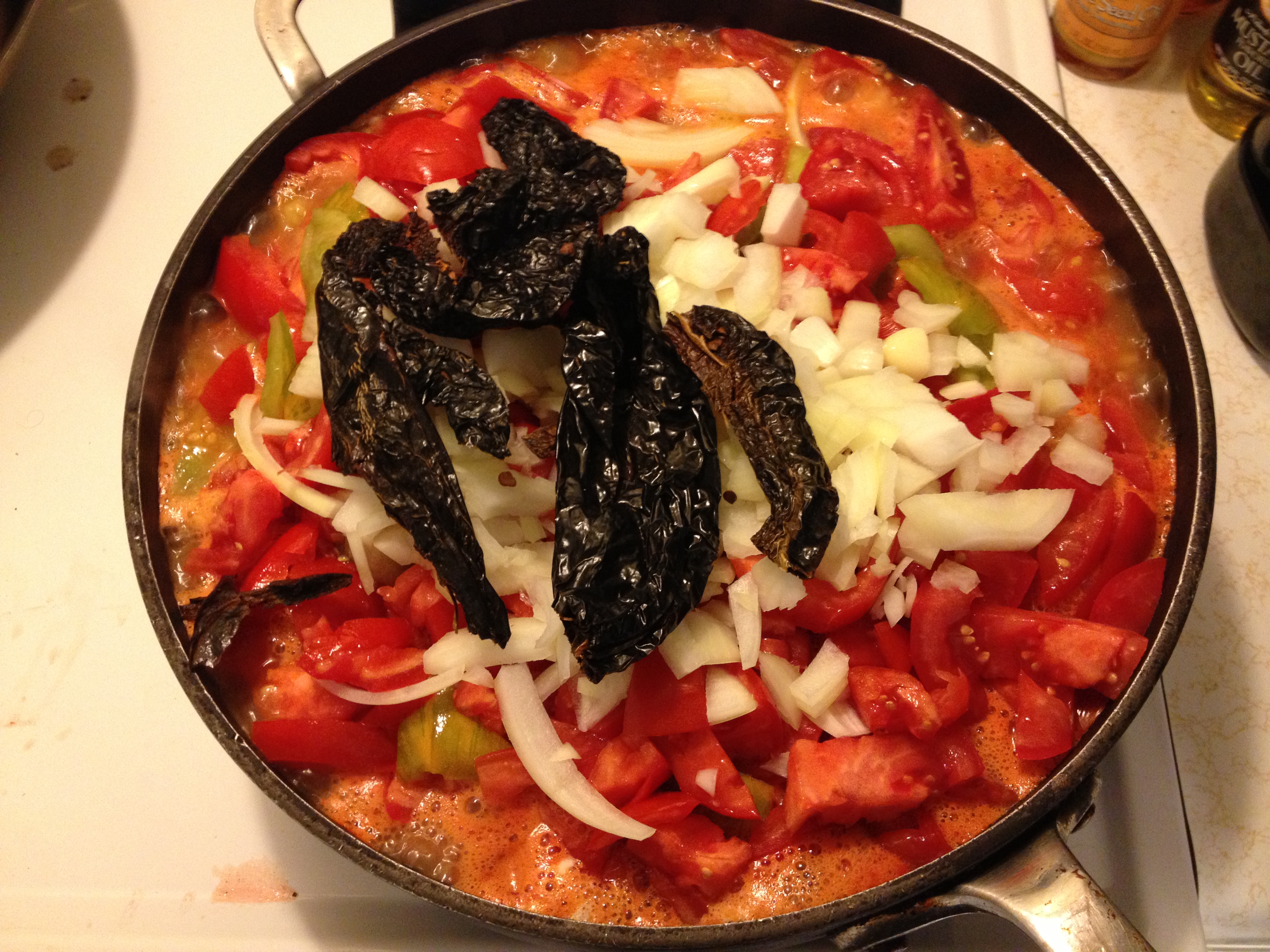 4-5 dried ancho or other large, dried chile
one small white onion
2-3 cloves garlic
4 cups cooked strained tomatoes (though you can also use about 5 cups chopped tomatoes, and then strain the whole sauce at the end; see picture)
1 tsp salt and 1/2 tsp white pepper
Using a pair of scissors, cut the peppers open lengthwise, cut out the stem and seeds and seed membranes. Flatten them out, and toast on a hot pan until fragrant. Combine with rest of ingredients, bring to a simmer, and cook until the peppers are completely soft and falling apart. Let cool a bit, then put in blender, and puree until completely smooth. If using chopped tomatoes, strain. If you use strained tomatoes, you’re done. Add salt or white pepper to taste.
Enchilada Sauce II
8-10 cascabel peppers*
one small yellow onion
3 cloves garlic
1-2 small chile peppers (optional)
1 tsp ground cumin
4 cups tomato sauce
Follow method described in recipe above. This sauce will take longer, since cascabel peppers take longer to cook. The main thing is to cook on a low heat, to avoid scorching the sauce, and add water if it gets too thick. Many if not most enchilada sauce recipes don’t use nearly this much tomato, but I find the use of the overflow makes for some nice sauce. Recipes for enchiladas using these sauces to follow.
*These are a small round pepper, also known as chile bola (rattle chile), that are fairly difficult to find in Iowa, even in stores with a huge supply, so I keep my eyes open for them, and always buy lots when I see them. I also use them in an amazing chicken wings sauce, with orange juice–a recipe I’ll try to post soon.

 FoodIowa