 Wild game was a real draw when I first moved to Iowa, and the abundance of pheasant in particular was something that made a move to the rural midwest something more palatable. In recent years, though, the situation has changed, and not for the better. Anyone who has lived or traveled through Iowa knows how uniformly cultivated the state is–corn and soy, soy and corn–but there used to be a lot more cover, in fence rows, and on uneven ground. Given the high price of corn and soy in recent years and the decrease in enrollments in federal programs like CRP that help keep land out of cultivation, farmers have found it hard not to plant every inch of their land, from road to road, fence to fence. And developments in technology have assured a more efficient harvest: today’s combine doesn’t miss many loose kernels of corn. This has meant less cover for pheasants, and less food left in the fields. It has also meant a catastrophic drop in the pheasant population. When I first moved here twenty years ago, I would see more pheasants in an afternoon than I would see in an entire season out in Montana. Limiting out (three roosters) was not that unusual. Now it’s become a seldom occurrence in these parts, and I don’t hunt for them nearly as often–seems a pity to encroach on a shrinking population. Last season I only got one bird. The year before, none. But there are some areas where pheasants still thrive–like on my friend Sandy’s acreages, which are oases of restored prairie in a desert of heavily farmed land.
One of the chores of assuring a robust return of native grasses and plants involves the prairie burn. I always look 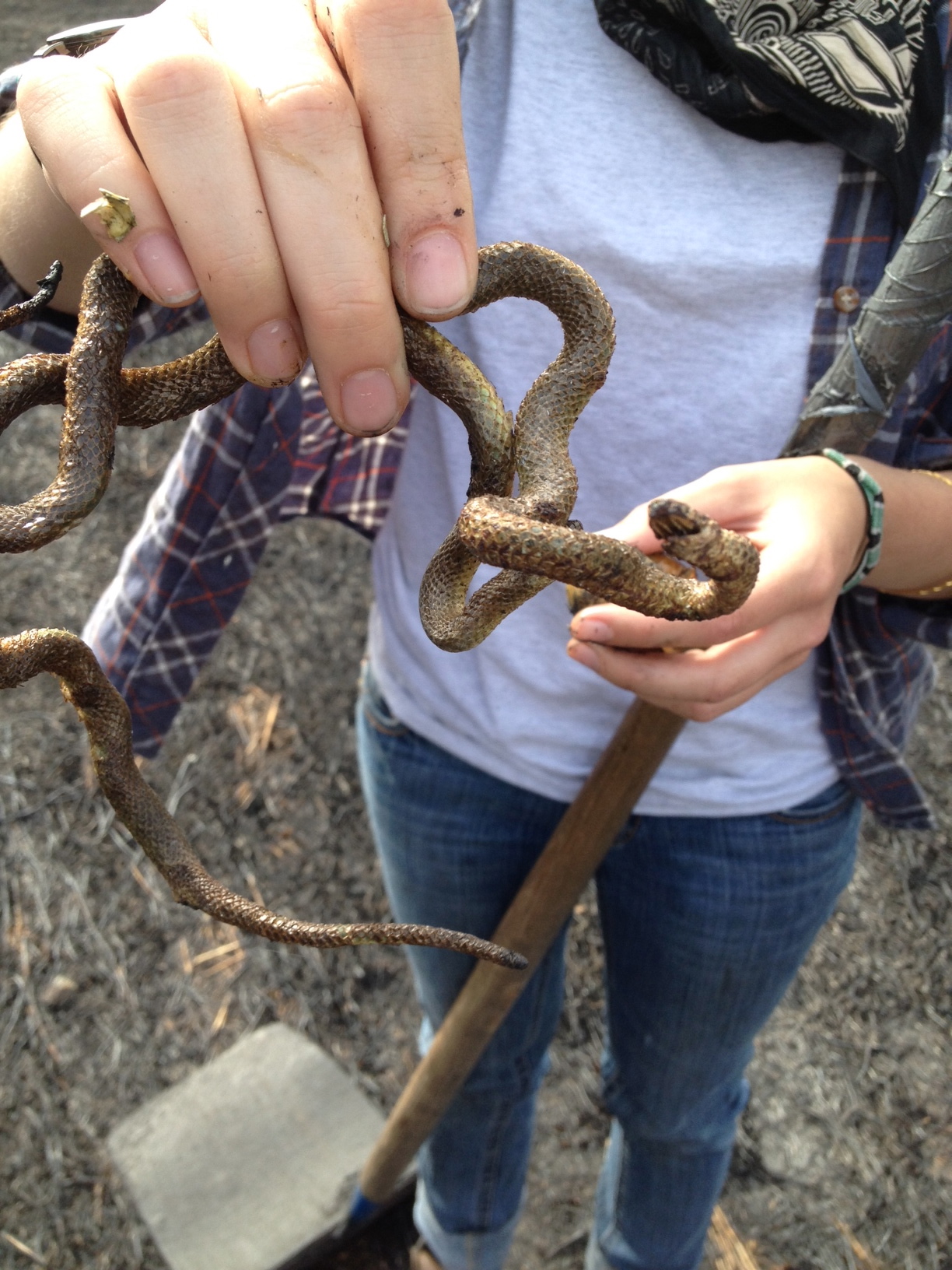 forward to an e-mail from Sandy in mid-April, when he gathers together hunters, neighbors, and students from the local college to come help with the burn. When the conditions are good, with the wind blowing in the right direction, the final burn off (which comes after a lot of work burning in a firebreak) can be pretty impressive. This spring I joined Sandy, along with a group of students, and helped him burn off some of his prairie south of Grinnell. After the burn, which was pretty spectacular, we all walked through the field, looking for dropped antlers and other things left after the fire. The students there were keen on foraging, and when we came upon some garter snakes that had been, well, cooked in the blaze, they gathered them up, with plans to eat them. And then we came upon a nest of pheasant eggs–something Sandy tries to protect by burning early, before the pheasants start nesting. Like the snakes, the eggs had been cooked by the fire, and it seemed like a rare foraging opportunity. We decided to eat them on the spot, and they were delicious. I didn’t try any of the snakes, but I ran into some of the students a week or so later, and they said they did eat them. I was impressed!

 FoodIowa