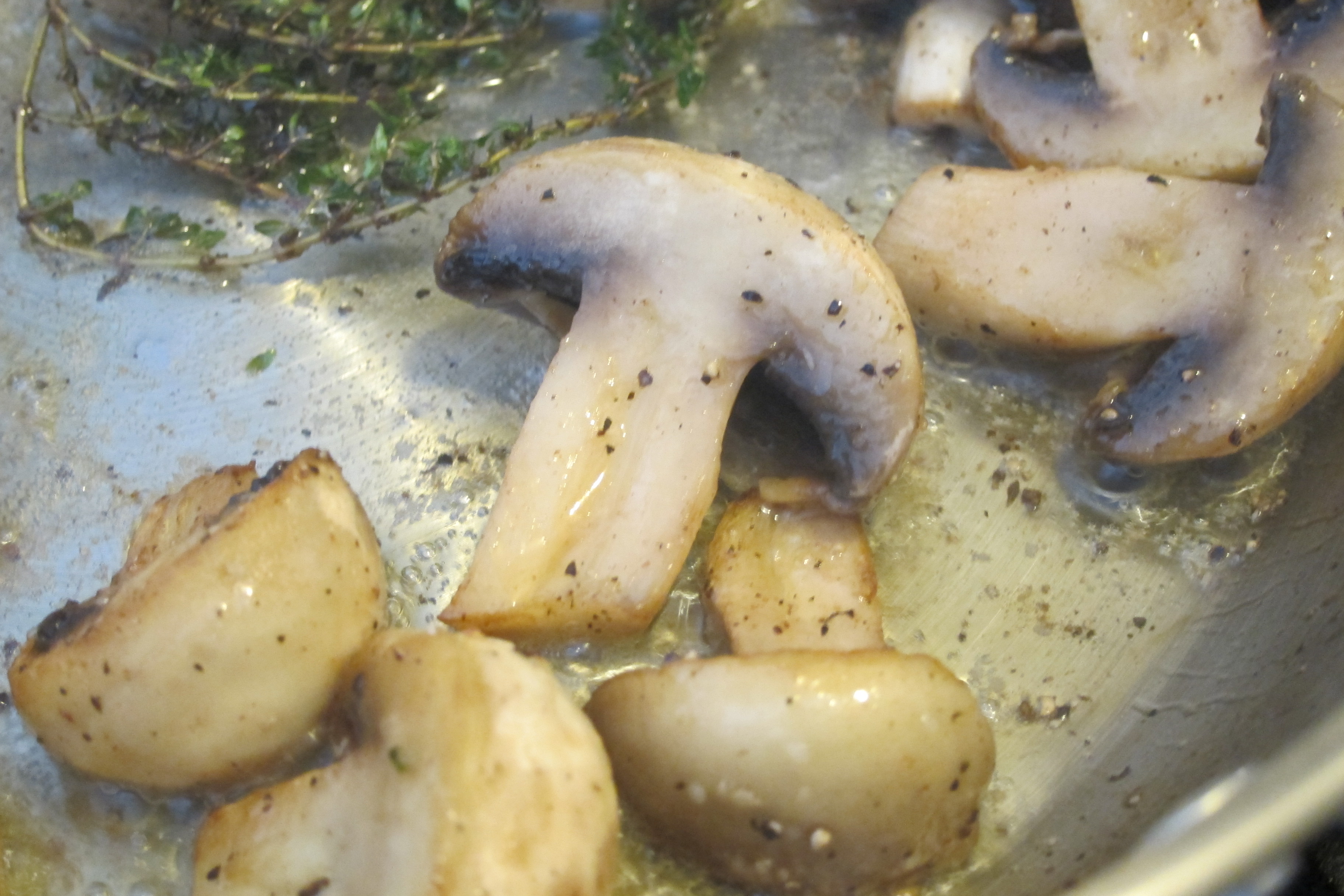
 I’ve always loved mushrooms, from the canned mushrooms of my childhood, which were pretty much all that was available forty years ago in Montana, to the fresh champignons that are now found in any American supermarket. They’ve been joined in the past couple decades by a pretty broad range of fresh and dried mushrooms, from portabellas (mature and baby) to crimini, from shiitake and enoki, to morels and chanterelles. Asian grocery stores are a good source, and carry a wide variety of fresh mushrooms, like the king trumpet and oyster mushrooms. I use mushrooms a lot, and in a lot of different ways, both as a main dish, and as part of a lot of other recipes.
Champignon and Portabello
I try to always have mushrooms in my refrigerator, and use them often. As with any vegetable, so much of the flavor and texture depends on the method. Sometimes I just throw whole mushrooms into a very hot sauté pan or roast them on the grill in a vegetable grilling pan, with a bit of olive oil and garlic. Sometimes I liberally season with salt and pepper, but recently I’ve been waiting until the mushroom is cooked before I add salt, which preserves some of the mushrooms meatiness. You can add herbs, or other vegetables, but sometimes it’s best to focus on the mushroom–maybe adding it as one of a tray of roasted vegetables. You can also halve or quarter them, depending on their size. This is a good method for cooking mushrooms for a meat recipe–the roasted mushrooms add a lot of flavor. For that matter, roasted mushrooms form a good base for vegetarian dishes, too.
Wild Mushrooms 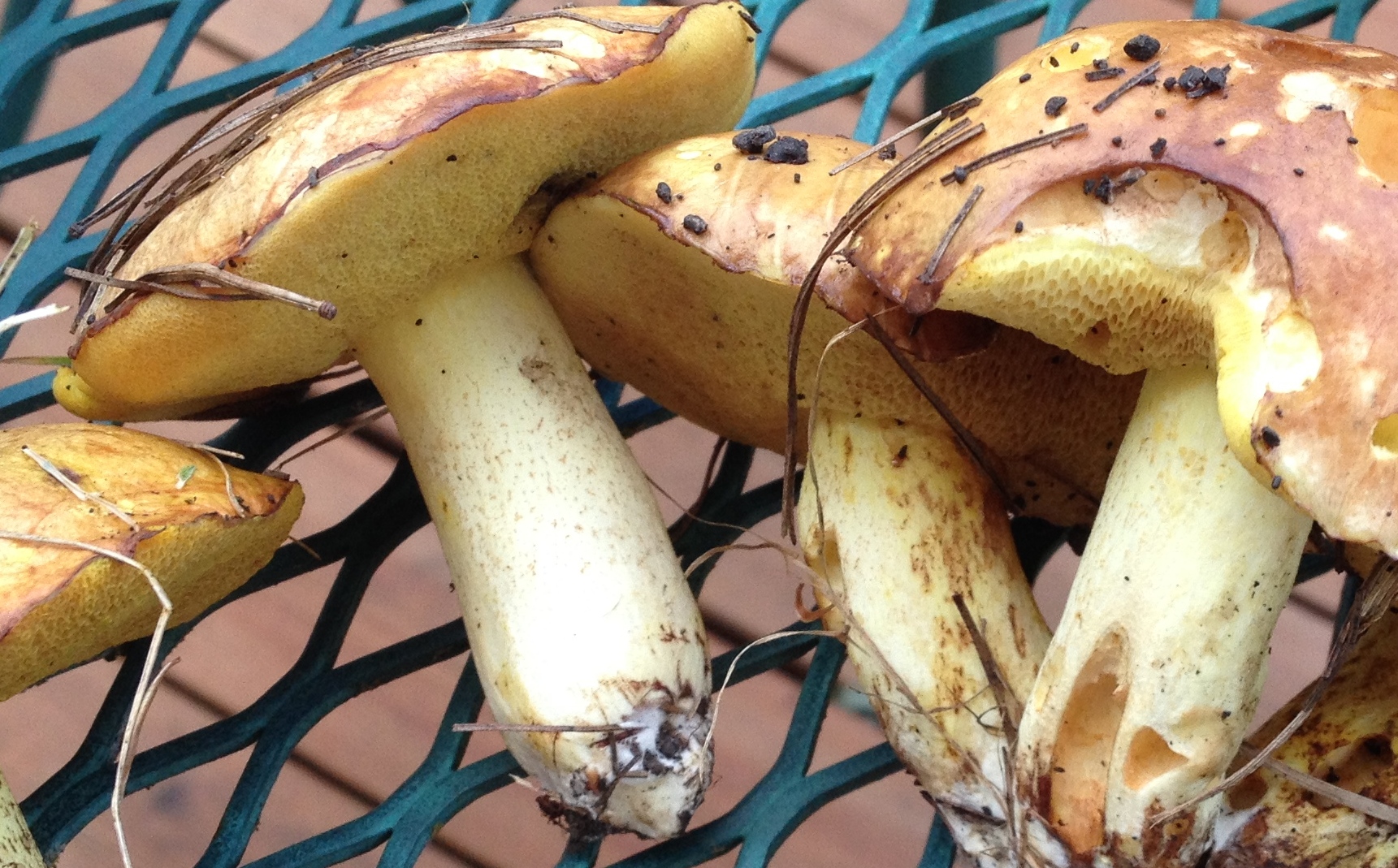 My first encounter with wild mushrooms was in a lecture hall at the University of Montana, in the spring of 1981, when a biology professor cooked a bunch of morels he’d gathered that morning over a bunsen burner, in the hopes of inspiring a bunch of jaded undergraduates. His demonstration stayed with me, though, and I’ve always been intrigued by wild mushrooms, and have always been on the lookout for an opportunity. The next time I had the chance to hunt for wild mushrooms was in Poland, in the mid-80s. In the Slavic world, mushrooms occupy a special place, and almost everyone learns how to gather mushrooms from an early age (unlike in the US, where we are always taught to avoid virtually everything wild; “don’t pick that, it might be poisonous!” is something we’ve all heard growing up). I remember taking a walk in a forest
  near Gdansk, Poland one weekday afternoon, thinking I’d have the area to myself, when a school bus rolled up, and a pack of eight year-olds spread out in all directions, on the hunt for the mushrooms in season. This was in the fall, when most of the mushroom picking takes place in Poland (and most of northern Europe). They were gathering boletus mushrooms–with the hopes of finding prawdziwki, or boletus edulis. (The name in Polish comes from the word for real, suggesting its pride of place in the Slavic pantheon of fall mushrooms; here’s a video clip of these mushrooms: https://www.youtube.com/watch?v=BhAZrk0T5vo.) There are all kinds of boletus mushrooms in Iowa, but I’m not as familiar with them here, and the old childhood admonition dies hard, and I mainly stick to hunting spring mushrooms, i.e., the famous morel. (The only problem is timing: the height of the season also coincides with the busiest time of the year in my job, and I’m hard pressed to find the time.) I also try to supplement gathering with whatever I can find in stores, which has become easy in the past decade or so, with just about every dried mushroom available even in supermarkets in rural Iowa. And I have an open request for friends traveling from Poland to bring me dried prawdziki, and Knorr mushroom bouillon cubes, which we don’t see much of in the states.
Morels
I had always wanted to hunt for morels in Montana, and always thought of looking when I saw cottonwoods, which my biology professor had mentioned was the ideal habitat. Years later, when I was out visiting my family in Montana one summer, morels had appeared in great numbers after a series of forest fires. There were so many that gangs of mushroom hunters foraging for restaurants came from as far away as Oregon, and the state even began to issue licenses for some areas. My folks, who have been living off the land for years, had run into some, and had gathered bags and bags. They ate a lot of them, too, and, as can happen with some wild mushrooms, my dad had a negative reaction–and hasn’t eaten a lot of morels since. And when I came that summer, while he wasn’t that interested, my stepmother was happy to take me out for more.
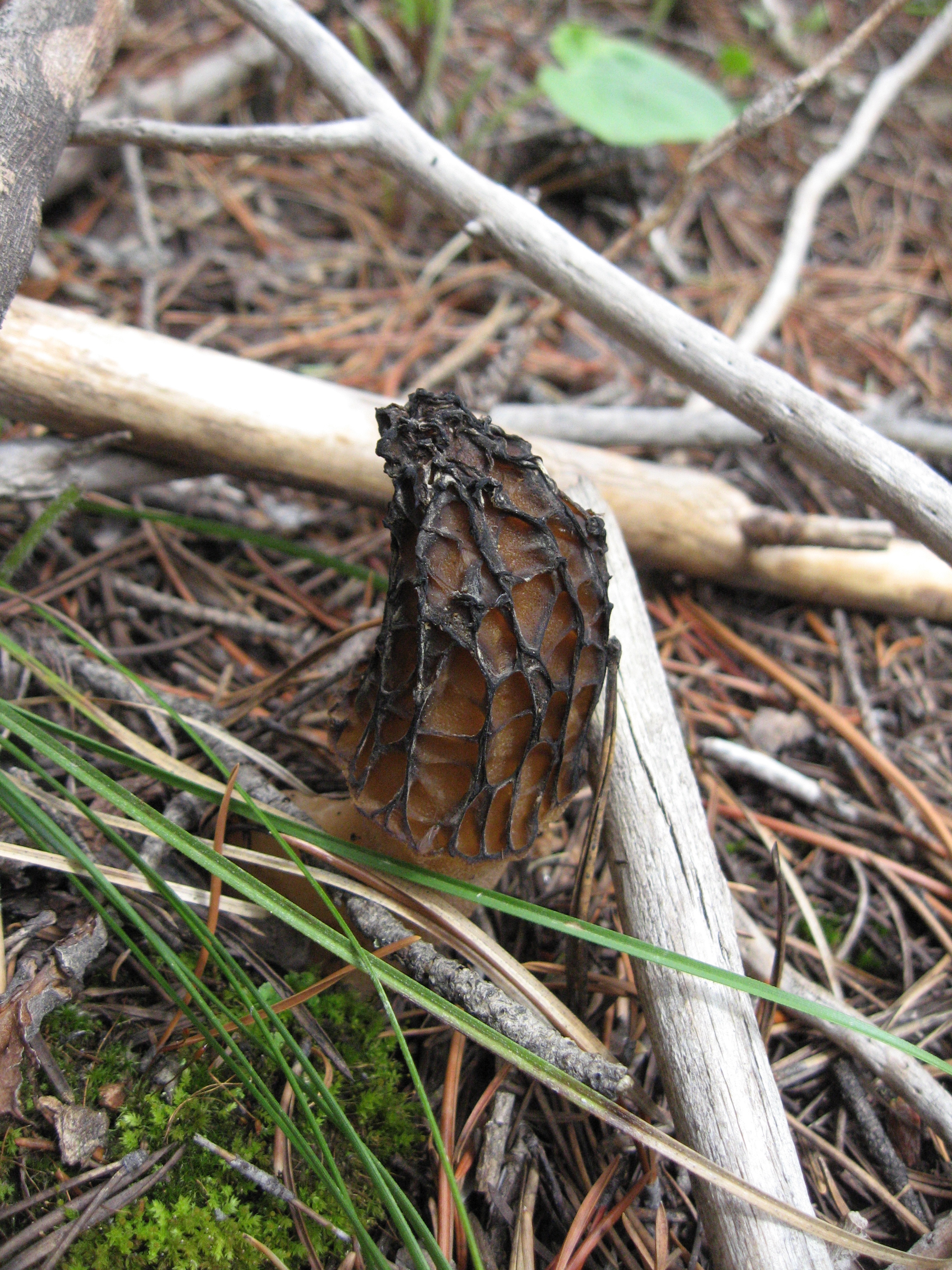
We set off for the high mountains, where the morels grew on the steep sides of the burnt slopes, poking their dark heads out of the pine needles. They were everywhere, and we had a great time that day, with one small misfortune: I lost a pair of prescription sunglasses. We looked everywhere, to no avail, and headed home. When I told my dad, though, he insisted we go back–about sixty miles much of it up a high mountain mining road. I mention it here, because he loves finding lost things as much as mushrooms, and because we found my glasses–and because I took my eldest son to help find the glasses. His fourteen year-old self hadn’t wanted to go look for mushrooms, but he was willing to go along to help find my specs; in the process of looking, he began to find mushrooms, and discovered the joy of foraging for things in the wild. I was pretty happy about that. And in the end, we also found my glasses! I’ve also had some luck finding morels in Iowa, though they always come in April, one of the busiest time of the spring semester, and I almost never have time to go out to hunt for them, but when I do, it’s a special occasion. Probably the best way to eat a morel mushroom is the same day it was picked, sautéed in butter, with some salt and pepper. They’re also wonderful as the mushrooms in an omelette, perhaps with a bit of white cheddar or swiss cheese. I also use them in venison dishes. But in the off season, dried morels are the next best thing. When I use dried morels (or other mushrooms), I often rehydrate them in brandy or cognac, but hot water also works just fine. Once they are soft, I remove them from the liquor, dice them, and add into the sauce. I use the reserved liquid to deglaze whatever pan I’m using.

 FoodIowa