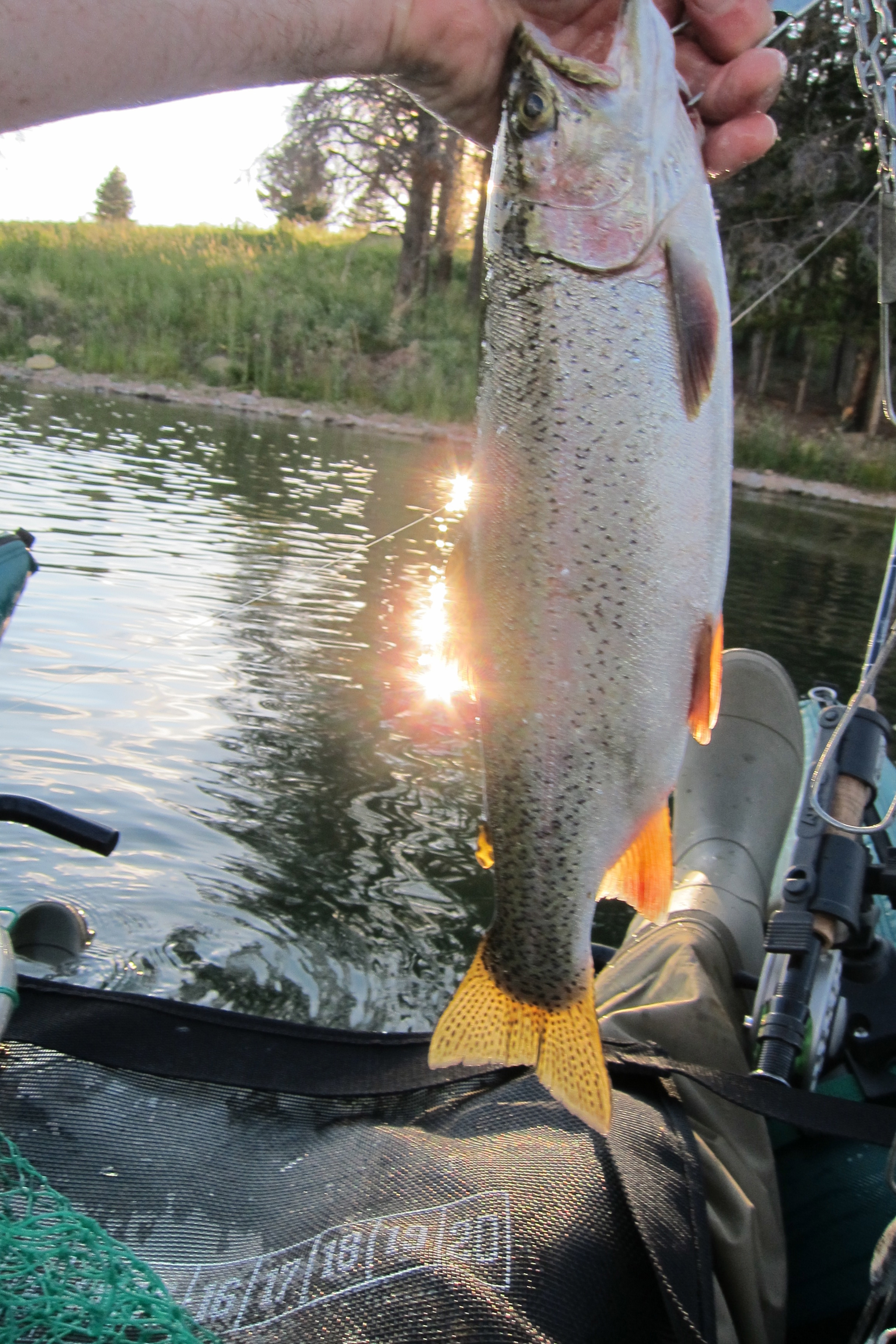
 Every summer I travel to Montana to see my family–and to fish for trout. We have some good spots, and this year we had tremendous luck. In the smaller streams, we generally catch and release. But we make an annual trek to a mountain lake where big rainbow trout are plentiful, and on a good day make for exciting fishing. We keep the trout we catch here, and I traditionally smoke whatever we catch, and take it back to Iowa. I’m also the designated fish butcher and while everyone else puts gear away, I clean and store the fish for the 90 minute mountain road run back home. Once we get back, I get them right into brine (in ziploc bags or some kind of plastic container). I use a basic recipe for brine –1 quart of water//1/2 cup salt//1/2 cup sugar. I boil the brine until the sugar and salt dissolve, and then chill the brine as best I can (it’s usually late at night), pour it over the fish, make sure they are all covered, and then put in the refrigerator. After 8-12 hours of
  brining, I prop open the fish with toothpicks, hang them in the smoker rack (I use a Lehr Jensen Little Chief, which has been reliable over the years), and let them dry until they reach the pellicle stage; the skin will feel dry but tacky. I sometimes use a hairdryer if I’m in a hurry, and I need to get them into the smoke (it’s a 24-hour operation, all told, so good timing is essential). I use 2-3 pans of woodchips. This year I used Montana applewood, and smoked them for 10-12 hours.
Once they are done, I wrap them in aluminum foil, cool, and store in the refrigerator (for a few days), or freeze. They last fine in the cooler out to Iowa (1300 miles one-way), where I then freeze them for later use. Probably the best way to eat them is to debone and serve, with some crackers, and some kind of soft cheese (neufchatel or chévre). You can also use smoked trout in other recipes, of course. One of my favorite preparations is a version of trout paté. The recipe below can be modified, depending on quantity and available ingredients. Green onion can be substituted for chives, shallots for red onion. Sometimes I’ll add capers, finally diced.
Trout paté
Ingredients:
1/2 -1 lb. smoked trout
1 package cream cheese or neufchâtel, room temperature.
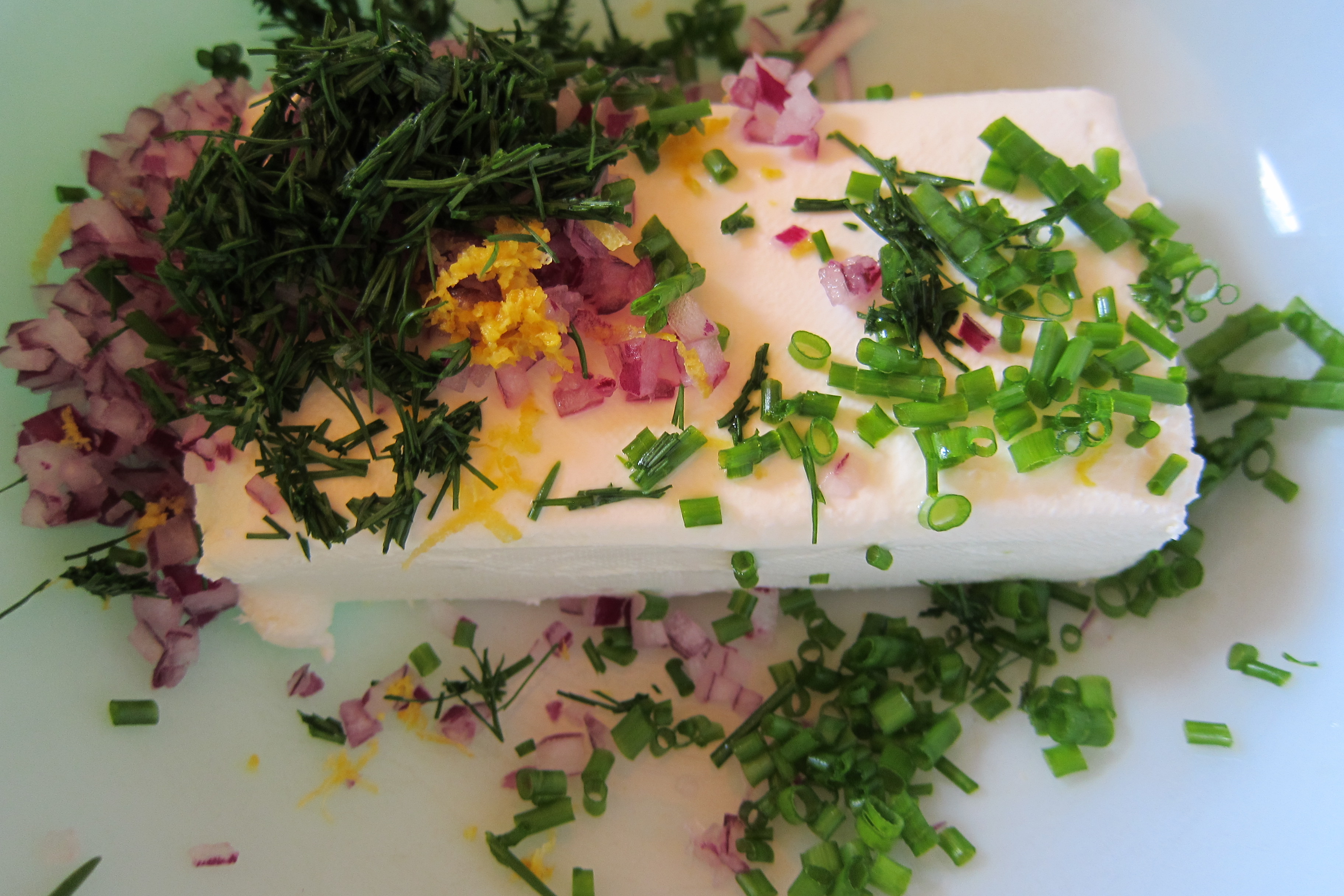
1/4 cup greek-style plain yoghurt
1/4 cup finely diced red onion
4-5 chives, chopped
3 sprigs fresh dill
zest from half lemon
juice of half lemon
white pepper to taste

Preparation: This is a super easy dish, though it does require a careful deboning of the smoked trout. The best way is to careful remove the skin* by making a dorsal incision, and then peeling it back, and removing one side, trying to get it to pull off of the bones. The pin bones, the small bones through the loin of the filet; on salmon and other larger fish, you use pliers to remove them) are particularly hard to get, but it’s important to get them all out. Once I have removed all the bones, I flake the trout into a bowl, reserving some larger pieces to cut up and sprinkle on top as garnish.
Once you have the fish ready, put all ingredients into medium mixing bowl, and mix to incorporate the trout. You don’t to break it up too much, so try not to over mix. Check for seasonings, and then put in serving bowl, and garnish with the reserved smoke trout. Serve on crackers; I try to find one that doesn’t have a lot of flavor, so the trout can do the talking.
*I used to discard the trout skin; my friend Andrew, who taught me how to cook Chinese, was horrified that I would throw one of the choicest parts away, and since then, I always cut the skin into strips, and serve with whatever dish I am making with the trout.

 FoodIowa
I just served the smoked trout you gave me, but unfortunately did not look for your recipe first, Just served them as is with crackers. Still wonderful and one of our guests was from Cairo and had never had smoked trout before..all enjoyed! Thanks, Todd! Sid
well, not completely as is 😉 I skinned, deboned and cut into small chunks to serve
So colorful! Almost looks too pretty to eat…….almost! 🙂